Valorant, how to get so good it feels like smurfing in your own rank
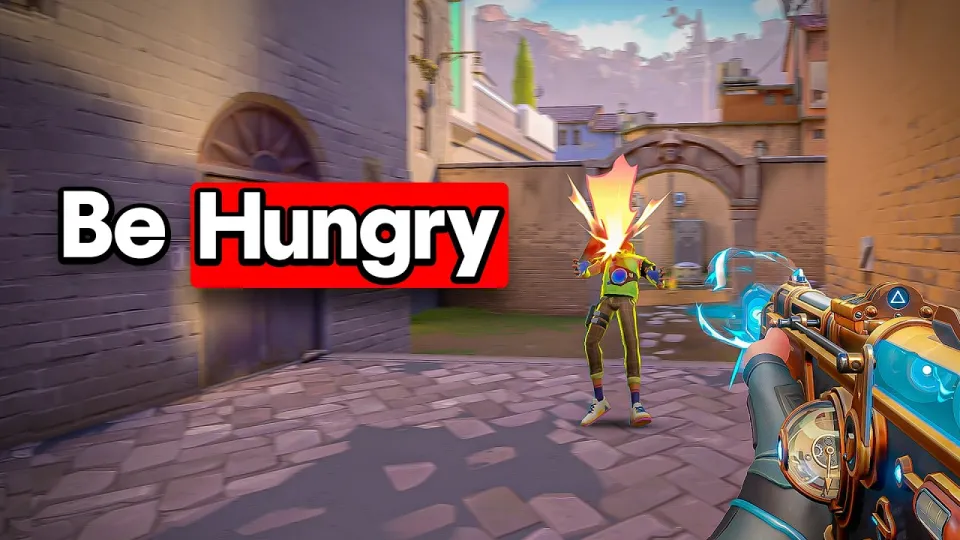
Video: How to Get So Good at Valorant it Feels Like Smurfing
You can order the same kind of articles for your own video to boost it on YouTube and Google. Just message the Telegram bot @sat_sit_bot. Articles with your video embedded are written and posted by the bot itself — on popular topical sites (no ads). Your first 50 articles are free.
· based on the channel Konpeki
Key takeaways
- The core idea: react to what the enemy actually does instead of predicting, and stay unpredictable yourself.
- Coach Konpeki (channel: Konpeki) frames the climb as process over talent: habits and reps, not raw aim.
- Structured coaching programs like the Immortal Roadmap advertise 5 divisions in 10 weeks — guaranteed.
- Movement, crosshair placement and utility usage are trainable in the Range and Deathmatch, not only in ranked.
- Reviewing your own VODs and playing a fixed, small agent pool beats grinding random queues for hundreds of hours.
If you want to get so good at Valorant that it feels like smurfing, stop trying to out-predict your opponents and start reacting to what they actually do — while making your own play hard to read. That single loop, applied consistently across aim, movement, utility and decision-making, is what separates a player who is stuck in Gold from one who looks two ranks above everyone else in the lobby. Coach Konpeki breaks this down in the video "How to Get So Good at Valorant it Feels Like Smurfing," and the free Immortal Roadmap application at roadmap.gg/v/lUfrMRb74SE is where his structured version of that process lives.
What "feels like smurfing" actually means in Valorant
A smurf does not win because of secret mechanics. A smurf wins because every action is deliberate: the crosshair is already where the enemy's head will appear, the peek is timed after a piece of information, and the trade is planned before the first shot. When you watch a high-rank player in a low-rank lobby, the gap looks like speed, but it is really decision density — they make more correct small choices per round than everyone else. The goal of this article is to install that decision density into your own ranked games, so that the enemy team starts typing "smurf?" in all chat while you are simply playing your main account.
The core principle: react, don't predict
The fastest way to look like a smurf is to stop guessing and start reacting. Most players below Diamond lose rounds because they commit to a plan before they have information: they push a smoke because they assume an enemy is there, they swing wide because they assume the angle is clear. Instead, gather information first — a Jett dash, a Sova recon bolt, a teammate's contact call, a sound cue — and only then choose your action. Reaction is not passive; it is faster and more accurate than prediction because it is based on real data. Pair this with unpredictability on your own side: if you always hold the same angle, always push the same timing, or always rotate the same way, a good enemy will read you after two rounds. Change your positions, vary your utility timings, and occasionally play the off-angle nobody expects. The comment section under Konpeki's video reduces the whole method to exactly this: react to the enemy and stay unpredictable.
Aim and crosshair placement: the mechanical floor
Mechanics are the floor, not the ceiling, but you cannot skip them. Crosshair placement is the single highest-return habit in Valorant: keep the crosshair at head level and pre-aimed at the most likely angle, and you remove the need to flick. In the Range, run the classic routine — 100 kills on bots with a Vandal or Phantom at a fixed distance, then strafe between two bots and fire one tap per side. A common question from viewers is whether you should stop moving before each shot or hold A-D-A continuously and fire as the direction switches; the practical answer is to fire at the moment your counter-strafe brings you to a stop, because Valorant's accuracy only resets when your velocity is near zero. Practicing that stop-and-shoot rhythm until it is automatic is what makes your duels look effortless to lower-ranked players.
Movement, peeking and the range drill that transfers to ranked
Good movement makes you hard to hit and makes your aim easier at the same time. Three things matter most:
- Counter-strafing — tap the opposite key to stop instantly instead of sliding into your shot.
- Peeker's advantage discipline — jiggle-peek for information, wide-swing only when you have a reason, and never re-peek the same angle the same way twice.
- Silent movement — walk when the enemy could be close, run only when you are certain the area is clear.
A viewer tip worth stealing: enable the movement error graph in settings and set its multiplier to 0.5, so you can literally see when your shots are inaccurate because you are still moving. Combine that with Deathmatch games where you only practice one thing per session — only counter-strafing, only jiggle peeks, only one-taps — and the improvement transfers to ranked far faster than mindless queueing.
Utility, agents and playing a small pool
Utility wins rounds that aim cannot. Learn two or three agents deeply instead of ten shallowly: know every lineup that matters on your main maps, know when your smoke or flash creates a real advantage rather than a decorative effect, and know how your kit interacts with the enemy's. A duelist who entries with a plan, a controller who cuts the map in half at the right second, and an initiator who sets up trades are all doing the same job — converting information into map control. If you want to climb, pick a role, master its timing, and let the enemy team feel that every corner they check costs them something.
Mindset, VOD review and the habits that compound
Rank is a lagging indicator of your habits, not of your talent. Two habits separate fast climbers from stuck players:
- Review one lost round per game. Not the whole match — one round where you died, and ask what information you ignored.
- Track one metric per week. Crosshair placement, first-blood rate, or deaths before minute one. Fix one thing at a time.
Konpeki's channel leans hard on this: the climb is treated as a process with reps and feedback, not as a talent lottery. That is also why structured programs exist — the Immortal Roadmap advertises 5 divisions in 10 weeks with a guarantee, which only makes sense if the underlying method is boring, repeatable habit-building rather than magic settings.
Common questions players ask before they start improving
Beginners ask whether they need a coach at all, whether console players can train the same way, and whether there is an age limit for structured programs. The honest answers: coaching compresses time rather than replacing practice; console Valorant has its own aim and movement feel, but the decision-making layer — reacting, trading, playing off information — transfers almost unchanged; and most programs care about commitment and rank, not age. Others ask how to go pro as fast as possible: there is no shortcut, but the shortest realistic path is a small agent pool, daily mechanical reps, VOD review, and playing with better players as often as possible. Finally, some players worry that "playing simple" means playing dumb — the opposite is true. Simple, repeatable plans executed with discipline beat chaotic highlight-reel plays almost every time.
Useful links
- Immortal Roadmap application (5 divisions in 10 weeks, guaranteed): https://roadmap.gg/v/lUfrMRb74SE
- Free coaching resources and office hours on Discord: https://www.discord.gg/UnRETVmRpV
- Twitch: https://www.twitch.tv/konpekichan
- Twitter/X: https://twitter.com/coachpeki
- TikTok: https://www.tiktok.com/@coachpeki
Final thoughts on playing like a smurf
Getting so good at Valorant that it feels like smurfing is not about a secret sensitivity or a hidden agent pick — it is about reacting instead of predicting, staying unpredictable yourself, and drilling the boring fundamentals until they are automatic. Crosshair placement, counter-strafing, a small agent pool, utility timing and one focused VOD review per session will move you faster than another hundred hours of autopilot ranked. The channel Konpeki built its coaching around exactly this process-first approach, and the video "How to Get So Good at Valorant it Feels Like Smurfing" is a compact version of that philosophy. If you want the structured version with accountability, book a free call through roadmap.gg/v/lUfrMRb74SE and see whether the Immortal Roadmap fits where you are right now.
Questions & answers
Can you actually "smurf" on your main account in Valorant?
Yes — smurfing here means playing so cleanly that you look over-ranked, not literally playing on a second account. The visible difference comes from reacting to real information, pre-aiming common angles and varying your timings, not from better hardware or a secret setting.
Do I need to stop moving before every shot?
Your first bullet is only accurate when your velocity is near zero, so you should fire as your counter-strafe brings you to a stop. Holding A-D-A continuously and firing mid-strafe will look fast but will miss shots you should hit; practice the stop-and-shoot rhythm in the Range until it is automatic.
Does console Valorant need different training?
The mechanical side differs — controller aim, aim assist feel and movement are their own skill set — but the strategic layer is identical. Reacting instead of predicting, trading teammates, using utility with purpose and reviewing your deaths all transfer directly to console ranked.
Is there an age requirement or rank requirement for structured coaching programs?
Most coaching programs, including the Immortal Roadmap, care mainly about commitment, available practice time and your current rank rather than age. The reliable way to find out is to apply or book a free call and ask directly about eligibility and scheduling.
Source: How to Get So Good at Valorant it Feels Like Smurfing · Markdown version